“My alphabet starts with this letter called yuzz. It's the letter I use to spell yuzz-a-ma-tuzz. You'll be sort of surprised what there is to be found once you go beyond 'Z' and start poking around.” Dr. Seuss
Thursday, January 14, 2021
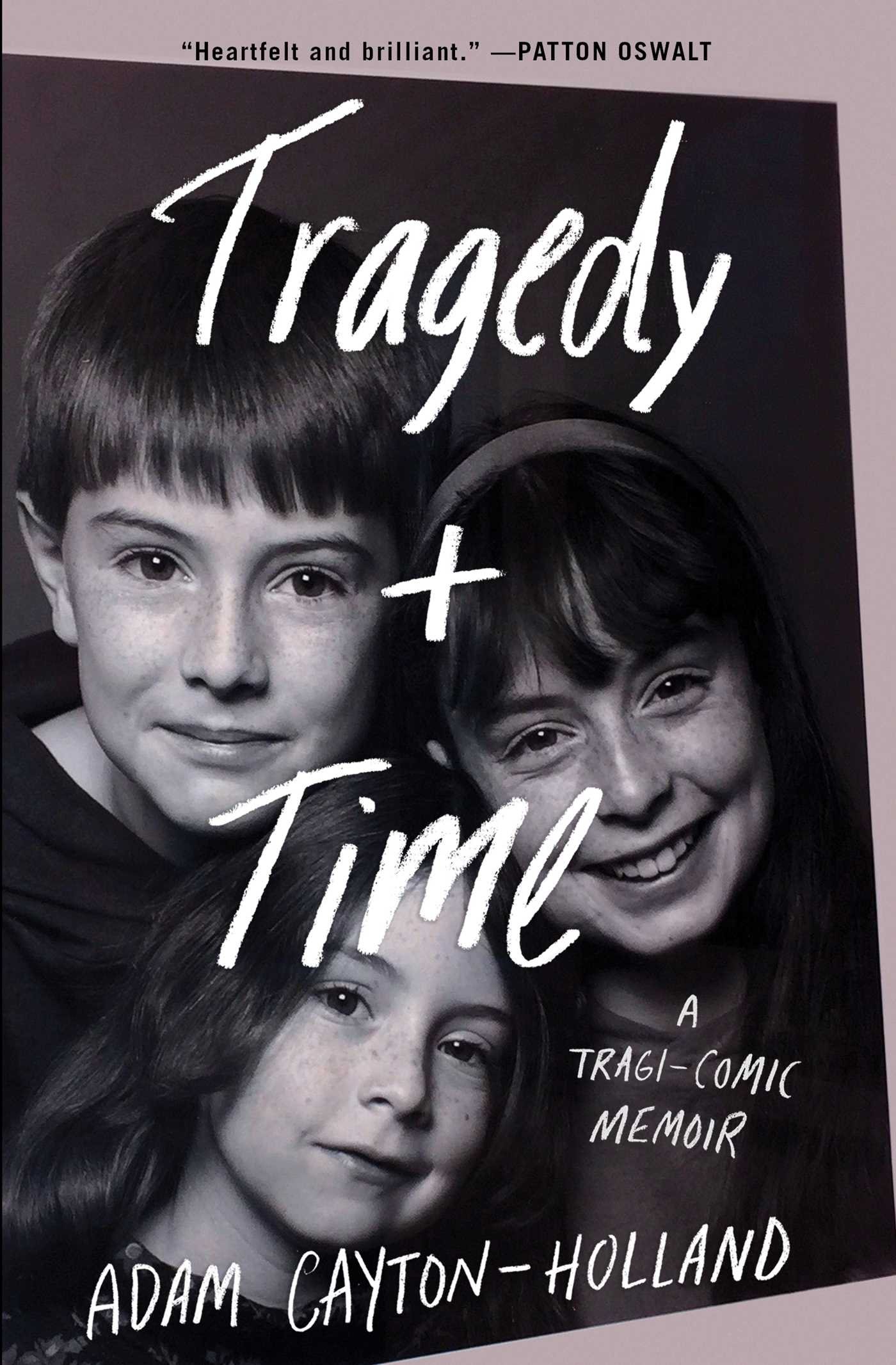
Tragedy Plus Time by Adam Cayton-Holland
"We were making each other laugh, and that was all that mattered to us. It became how we related; every conversation between Lydia and I would quickly veer off into absurdity. It seemed more fun to laugh at the world then cry about it."
"Lydia was my go-to comedy collaborator. Not only did we share a sense of humor, but also a sense of mortification. And self-respect. We were never the drama geeks hyperventilating at their own hilarity...we were the cynical assholes watching those neckbeards and mocking them. ...Yet here we were staring down the barrel of a total comedy fucking disaster and Lydia's only response was to start an improv troupe. All we needed was a fat guy in a sweater."
Books Read in 2020
Flowers in the Attic - VC Andrews
Petals on the Wind - VC Andrews
And Still I Rise - Maya Angelou
Proof - David Auburn
I'm Still Here - Austin Channing Brown
Piece of Cake - Cupcake Brown
When No One Is Watching - Alyssa Cole
In at the Deep End - Kate Davies
All the Light We Cannot See - Anthony Doerr
Dear Evan Hanson - Val Emmich
The Vagina Monologues - Eve Ensler
This Is How It Always Is - Laurie Frankel
Freedom - Jonathan Franzen
A Million Little Pieces - James Frey
There Are Things I Want You to Know (About Stieg Larrson and Me) - Eva Gabrielsson
American Gods - Neil Gaiman
Cold Cold Heart - Tami Hoag
Wow, No Thank You - Samantha Irby
Daisy Jones and the Six - Tara Jenkins Reid
The Sun and Her Flowers - Rupi Kaur
Ask Again, Yes - Mary Beth Keane
The Outsider - Stephen King
Revival - Stephen King
Orphan Train - Christina Baker Kline
The Blue Shoe - Anne Lamott
The Preservationist - David Maine
Carry On, Warrior - Glennon Doyle Melton
The Last House Guest - Megan Miranda
What Alice Forgot - Liane Moriarty
My Year of Rest and Relaxation - Ottessa Moshfegh
Sweat - Lynn Nottage
The Book with No Pictures - BJ Novak
Yours 'Till Niagra Falls, Abby - Jane O'Connor
Topics of Conversation - Miranda Popkey
Grief Is the Thing with Feathers - Max Porter
High School - Tegan & Sara Quin
Dog Sees God - Bert V. Royal
Look Again - Lisa Scottoline
Calypso - David Sedaris
We Need to Talk About Kevin - Lionel Shriver
More Happy Than Not - Adam Silvera
Never Let You Go - Chevy Stevens
Sing, Unburied, Sing - Jessamyn Ward
The Death of Mrs. Westaway - Ruth Ware
Nothing to See Here - Kevin Wilson
Red at the Bone - Jacqueline Woodson
Tuesday, October 16, 2018
In the Body of the World by Eve Ensler
Wednesday, October 10, 2018
You Can't Touch My Hair (And Other Things I Still Have to Explain) by Phoebe Robinson
There are way too many highlights to capture them all, so I'll just generically slap some quotes up. But I'll also say that the first 30 pages of this book made me laugh out loud (something I rarely do), made me cry (another thing I seldom do), and made me think about things I've thought about before in a whole new way.
"Blackness is not a monolith. ...But some people don't want to believe that, because if varying degrees of blackness become normalized, then that means society has to rethink how they treat black people. In other words, if you allow black people to be as complicated and multidimensional as white people, then it's hard to view them as the Other with all the messy pejorative, stereotypical, and shallow ideas that have been assigned to that Otherness."
"i got into comedy partially because I was not hot. The other part was that I realized I could make people laugh with slick ans narky comments, but honestly, the not-hot factor played a huge role. I was always the girl that made all the boys laugh, and while that never got me any boyfriends, it got me male attention, which I was happy-ish to settle for while they all traipsed off with the better-looking, cool girls...It made me a better, more interesting person because I developed other skills to attract people, and one of those skills is my sense of humor and personality."
Perhaps the part that made me laugh the most most most is when Robinson makes a list of demands for Future Female President.
"3. OK, this is probably the most import request on this list, so if you can only do one thing, I beg of you that it's this: When you get sworn into office, yell, 'I'm a feminist,' and then throw your fist in the air like you're Judd Nelson at the end of The Breakfast Club.
...3A. I get that this may seem super aggressive and that politicians are not supposed to ruffle feather, but this would be the ultimate gesture to let women know you have their backs. Now, FFP, if you're Hilary Clinton, you're probably like, 'Can't people tell I'm a feminist because I wear Talbots pantsuits on the regs?' 1. Please don't say 'regs.' So not your stulye, and 2. No, because, your wardrobe screams 'very fancy judge at a chili cook-off in Minnesota' more than it does 'feminist,'so we need you to actually drop the F-bomb into the microphone. And when you do , so many crazy old white dudes are going to freak out that it'll seem like someone just told them there are only seven tickets remaining on StubHub for a Steely Dan concert."
on being one of two black girls in a predominantly white school: "There was always a tinge of loneliness that colored my high school experience. I didn't have a mirror, a soundboard, someone who knew the same things I did because we were from the same cultural tribe."
Robinson also tackles the history of black hair throughout pop culture, schooling me on Angela Davis, Res, and Erika Badu. She also hits many high notes of women on film that didn't lead with the pretty, but with their strength (see CJ Cregg, Felicity Porter, Denise Huxtable, Maxine Shaw...).
Saturday, June 16, 2018
When Paul Met Artie by G. Neri Illustrated by David Litchfield
"They record themselves to hear their flaws until there aren't any left."
Sunday, December 16, 2012
Thursday, February 24, 2011
Two Lives: Gertrude and Alice by Janet Malcolm
What Malcolm has given us is equal parts history of Stein and Toklas' relationship and an astute criticism of Stein's work. How two Jewish lesbians survived living in Europe during the 30s and 40s is one the larger question posed. Essentially, they moved to the French countryside and rarely spoke of their religious heritage. Evaded the issue, even.
I've long been enchanted with Stein, her brother Leo and their unique brand of living at 27 Rue de Fleurus. The company they kept during the 20s is a veritable who's who, but Malcolm wholly ignores this, aside from a brief mention of Hemingway. The focus is truly on the escape from Nazi terror and the process by which Stein wrote.
Malcolm is seemingly not a huge fan of Gertrude, but she thoroughly investigates her library and fairly sheds light on one of my favorite writers. If you've read my review of the play Gertrude Stein, then you are aware of my adoration of stream-of-consciousness and her heavy repetition of words. I'll spare you a litany of quotes, but share some of how Malcolm classifies the writing.
"This is truly a new way of writing a novel, a novel where the author withholds the characters from the reader. ...The characters resemble shades."
"When she uses a new word it is like the entrance of a new character."
"She refuses to see things clearly that can only be seen darkly."
"Although it is possible to finish, it is impossible to sum up."
Saturday, March 13, 2010
Woman Behind the New Deal by Kirstin Downey

Ever heard of Frances Perkins? I won't judge you, because I hadn't either.
When I heard that this was one of my book clubs' picks, I was immediately excited. I've had many conversations (heated debates, honestly) about FDR and all things that resulted from the New Deal. There's a mural in my hometown that was done with CCC funds, and my grandfather served in the Corps. I was less excited when I realized that this historical biography is 400 pages long. Ugh.
So again: heard of Frances Perkins? She was the first female to ever be appointed to the U.S. Cabinet, serving as Roosevelt's Secretary of Labor for his entire presidency. Perkins was the progressive force behind FDR, and often served as his conscience. Under her persuasion, the CCC and the Public Works Administration were born. Oh, and a little thing called the Social Security Act? With it, she created welfare, pensions and unemployment. She also established the first child labor laws, the 40-hour work week and overtime law. Given that she fought tirelessly for these things and labor unions, I'm surprised that my dad hasn't lectured me on Frances Perkins for the last 30 years. Wait, in the American public school system we learn about Betsy Ross and how she sewed a flag.
Pleasantly surprised at how this biography read more like a novel, I was engrossed and fascinated in the way the Frances' life unfolded. Her personal life, while held immensely private, was less than ideal. Raised in priveledge, she shunned her affluence, but used her connections to her advantage later in life. Constantly aware that people of influence could (and would) eventually help the plight of the less fortunate, she was saavy and sharp in maintaining relationships while carving her own path in social work.
This book made me think. It is almost unimaginable how this woman dealt with the glass ceiling in the 30s and 40s. Frances Perkins maintained a career and a family...and changed the future for millions.


